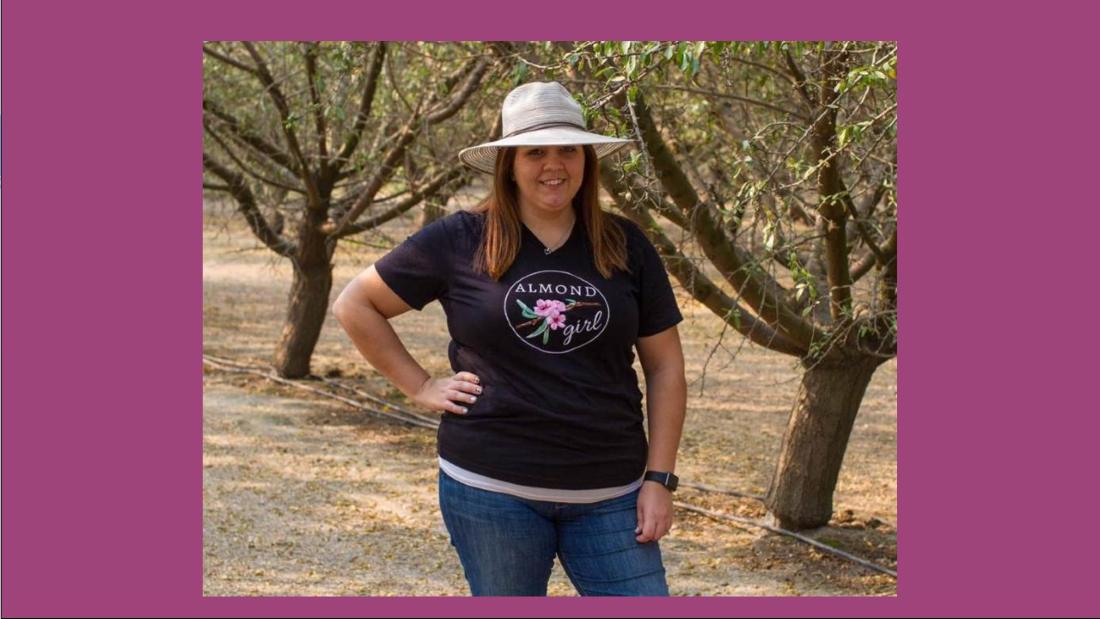
When I started this journey, I had no idea the knowledge I would learn from farmers across the world.
I’ve been learning from farmers my whole life, of course. Here in California, I’m a fourth-generation almond farmer.
But this was different: a special opportunity to participate in an international fellowship that connected me to an apple grower in Slovenia, a vineyard owner in France, a cattle producer in Arizona, and so many more.
We were among the first 30 participants in the EU-U.S. Fellowship for Young Leaders in Agriculture. We started the program last fall and graduated last month. For a year, we participated in workshops, heard lectures, and visited farms. The goal, according to EU Ambassador Jovita Neliupsiene, is to encourage farmers “to innovate, to share best practices, and to build resilient agricultural systems that provide for their communities.”
And that’s what we strived to do. Every two weeks, we met by video conference and discussed a different topic, such as sustainability, public policy, and climate change. These sessions featured guest speakers and lasted a couple of hours. We listened and debated. I always came away with new information and insights.
This was worthwhile but it wasn’t the best part.
The most fruitful aspect of the fellowship was meeting in person with farmers abroad and at home.
In April, the Americans flew to Europe. In the Netherlands, we saw tulips blooming everywhere, as a reminder that farming doesn’t always involve food production. Sometimes it’s about producing beauty.
We also visited Wageningen University, a top research institution, where we saw what scientists are doing to build better seeds that will grow into healthy and hardy crops. We toured huge greenhouses and witnessed robots prepare the soil for planting. In Brussels, we met officials, including Christophe Hansen, the EU’s Commissioner for Agriculture and Food.
One highlight of the trip was encountering Judith de Vor, my fellow member of the Global Farmer Network. As a member of an expert panel, she described how she uses technology on her dairy farm. It was good to see a farmer included in this conversation because we’re often excluded from the policy discussions that shape our work.
On the second trip, in June, the Europeans came to the United States. We visited farms in Virginia, met government officials in Washington, D.C., and attended a Nationals baseball game.
In the spring, the Europeans had taught me about the EU’s agricultural policies. Now I was doing a lot of the teaching, explaining our federal system, the importance of the farm bill, and the strategy of hitting a sacrifice fly to right field when there’s a runner on third with less than two outs. Baseball baffled them, but I think they mostly understood the agriculture.
As we traveled and talked, we got to know each other. We were a diverse group, but we discovered common interests and struggles involving everything from weather and pests to technology access and the frustration of regulations that make more sense beneath the fluorescent lights of air-conditioned offices in capital cities than they do to the men and women who work outside and grow food.
I bonded with a couple of Spanish farmers who confront water scarcity, just as I do in California. We discussed the urgency of conservation and the technology of irrigation—and we’re ready to serve as resources for each other in the years ahead.
We also learned the value of coming together. Here in the United States, farmers can feel segregated from those who farm in different sectors. Meanwhile, European farmers have demonstrated the power of collective action through large national protests. I’m not quite ready to lead a protest movement by driving a tractor to Sacramento, but I have a new appreciation for how combining our voices and telling our stories can deliver results. Farmers must speak up.
The fellowship also provided an unexpected lesson. Farmers in the United States are the most productive in the world, but we’re also busy and stressed out. The pace in Europe is slower, and I wonder if I should dial it back as I try to balance my life as a farmer who is also a wife and a mom.
We’ll see about that—and I’ll probably text our fellowship’s group chat, where I expect to be in touch for a long time with my new farming friends, as we keep learning from each other.