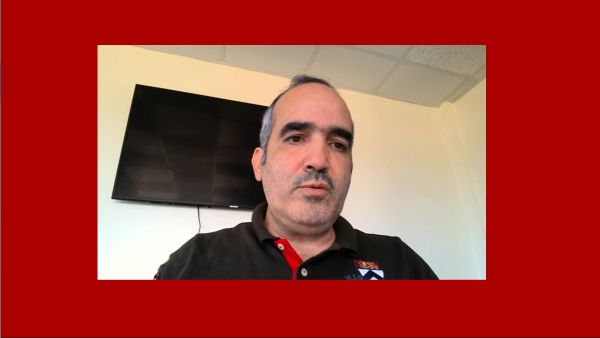
Amine grows blueberries in Morocco. He exports much of what he harvests to Europe. And like farmers across the continent, he is watching the weather become something he can no longer predict.
It used to be simpler. Hot days were hot. Rainy seasons were wet. The extremes existed, but they were manageable, a bad week here, a difficult month there. But something has shifted. Amine is clear about this: the events themselves haven’t changed, but their rhythm has. They come more often now, and they stay longer.
“We have someday high temperature,” he explains, “and someday lots of rain and big wind. In the beginning it was someday in the year but in the last years it was more often, and we live such events more days.”
“The weather in our region has a big, big impact on what we produce.” — Amine, blueberry grower, Morocco
THE CROP
A Berry Built for Warmth
Morocco is not the most obvious place to grow blueberries. The crop is most closely associated with the cool valleys of North America or the highlands of Chile. But Morocco has developed its own blueberry industry, built around low-chill varieties cultivars specially adapted to warmer climates that don’t require long cold winters to trigger fruiting.
It’s a smart agronomic choice, and it has opened doors to the European market. But low-chill varieties are not invincible. They are calibrated to a particular climate envelope — and that envelope is being tested.
THE IMPACT
When the Rain Came, Losses Followed
Amine doesn’t speak in abstractions when he talks about climate. He speaks in percentages. A recent stretch of heavy rainfall the kind that is now arriving more frequently hit his operation and others in his area hard.
13–15% PRODUCTION LOST IN A SINGLE RAIN EVENT (blueberries & avocado)
FREQUENCY & DURATION OF EXTREME WEATHER increasing year on year
The losses hit both his blueberry crop and his avocado trees. Two different plants, two different growth cycles — but both equally exposed to the same downpour.
What makes Amine’s account particularly striking is the nuance he brings to it. The very rain that damaged his harvest was welcomed elsewhere. “This rain permits growers in other areas to produce cereals,” he notes. Climate disruption does not distribute its consequences evenly. It depends on what you grow, and where.
The same storm that cost Amine 15% of his harvest gave neighboring cereal farmers one of their better seasons. Climate risk is local, crop-specific, and deeply unequal.
THE MARKET
Europe is Watching — Closely
If climate is one pressure, the market is another. Amine exports a large share of his production to the European Union a lucrative but demanding destination. And the demands are evolving.
EU buyers are no longer satisfied with a box of berries and a price. They want to know how the berries were grown. Specifically, they want to know about water.
“Our clients ask us each time how much water we are using in production,” Amine explains. “And to control the use of whatever we are using, sensors.” — Amine
This is the new reality for smallholder exporters: environmental accountability has become a condition of market access. The farm is no longer just a place of production. It is a data point in a supply chain that runs all the way to a supermarket shelf in Berlin or Amsterdam — and consumers at that end are asking questions.
Sensor technology allows Amine to monitor and document water usage in real time, providing the kind of evidence his European clients now expect. It’s a significant investment of both technology and know-how — but the alternative is losing access to the market entirely.
WHY IT MATTERS
One Farmer. Many Fronts.
Amine’s story is not unusual. Across North Africa and Sub-Saharan Africa, farmers who have built their livelihoods around export crops are facing a convergence of pressures: a climate that is becoming less predictable; markets that are becoming more demanding; and the daily task of managing both with limited resources.
What his account offers is something beyond statistics. It offers a ground-level view of what adaptation actually looks like not as a policy framework or a development objective, but as a farmer walking his land after a storm, counting what was lost, and figuring out what comes next.
Report by – Ruramiso Mashumba, Zimbabwe, Global Farmer Network Regional Lead: Africa Ag. Based on a direct interview with Amine, blueberry and avocado grower, Morocco · Compiled from primary testimony
To learn more, contact Mary Boote, +1 515.274.0800 or [email protected]