Brazilian farmers are the world’s biggest conservationists.
That’s not our reputation, but it’s the truth. Brazil is not feeding the world despite preservation. Brazil is feeding the world while preserving one of the largest areas of native vegetation on the planet. That reality deserves to be part of the global conversation.
Brazil is a huge country—the biggest in South America and the fifth biggest on the planet. More than 200 million people live here, in sprawling cities such as Sao Paulo and Rio de Janeiro as well as in rural areas. Our economy is the 10th biggest, ahead of Australia, Mexico, and South Korea.
We are also an agricultural superpower. My family farm plays a small part, growing soybeans, corn, wheat, sorghum, and peanuts, with a strong focus on certified peanut seed production.
Despite so many people and so much production, Brazilians still devote the bulk of our nation to environmental preservation. Native vegetation occupies about two-thirds of the country. The amount of land in Brazil that never has been cleared or transformed by human activity is larger than the combined territory of the European Union.
Think about that for a moment. If you add up the size of the rainforests in the Amazon, the grasslands of the Cerrado, and other untouched areas, the sum is bigger than the combined size of France, Spain, Germany, and the other 24 nations of the EU.
Yet we face criticism from people who wrongly think that Brazil constantly cuts trees and plows fields to build cities and farms. Many of these detractors live in the EU, which is home to a lot of green space, but not as much as we protect in Brazil and most of it not nearly as wild.
Unfortunately, Brazilian agriculture is often discussed emotionally and politically instead of technically. Many people outside Brazil do not understand how much land is preserved, how modern farming works, or how much technology is involved in producing food sustainably.
The reality is far different from the perception. Farmers don’t destroy the environment. We depend on it. Soil, water, biodiversity, and climate stability are essential to our health and survival. We know this better than anybody because we live it.
We have strong conservation laws. They safeguard enormous amounts of our natural spaces. This includes our farms. On our own farm, for example, we maintain approximately 20% of the property as protected native reserve. This land generates no direct revenue, yet we are legally responsible for preserving, monitoring, and protecting it. In other words, Brazilian farmers not only produce food, we also financially support large-scale environmental preservation.
We own this land. It’s private property. And we keep it in a state of nature.
This creates an important question: what other economic sector in the world immobilizes so much private capital purely for environmental preservation?
The answer is none, with a single major exception: Brazilian agriculture.
Farmers in other nations face many regulations, of course. Yet my colleagues in the EU and the United States don’t have to deal with land-use rules like the ones that govern agriculture in Brazil.
In general, I support my country’s conservation efforts. Rules must be based on sound science. They must balance economic and environmental sustainability. When regulators and farmers work in harmony, we can preserve vast areas and grow a lot of food.
Access to technology is essential. The future of farming is not about converting jungles and savannas into farms. It’s about boosting production on the land we already devote to food. This way, we can conserve the environment and keep up with the demands of a hungry world.
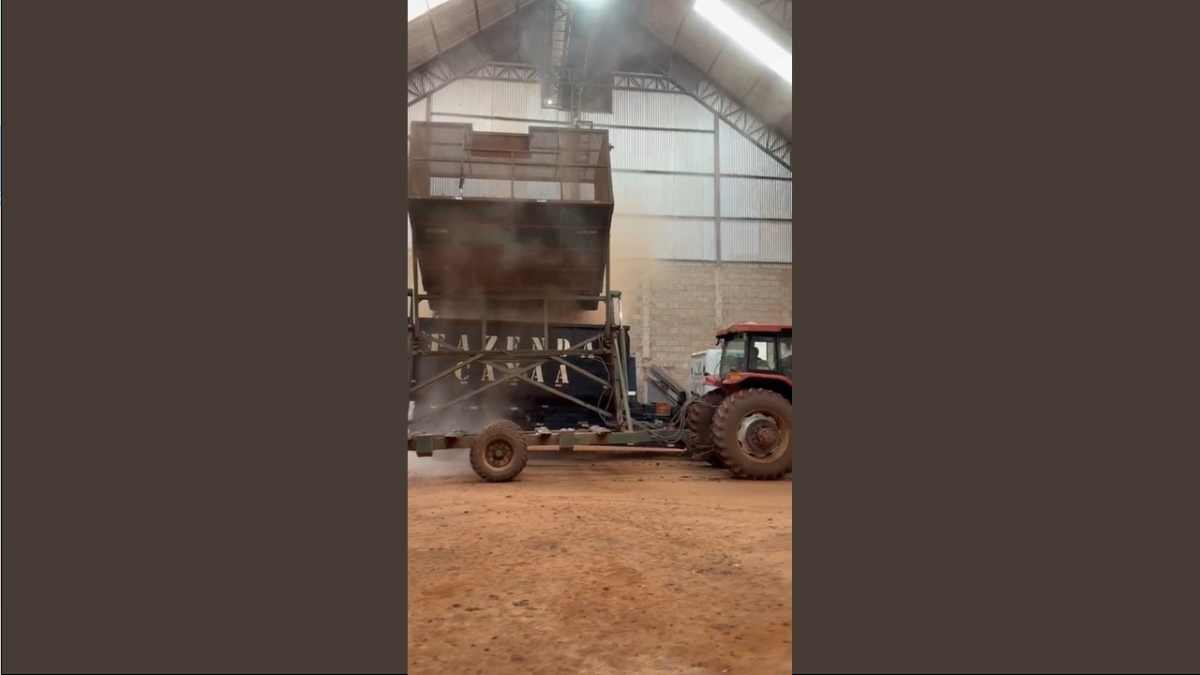
On my farm, we pursue this goal with cutting-edge technologies such as GPS-guided planting and fertilization, remote-controlled irrigation pivots, and data-driven operational management. Modern farming also involves strategic innovations in logistics, branding, international markets, communication, and finance.
We’re always on the lookout for new opportunities, and that’s why we moved into peanuts.
When I was younger, our farm concentrated on traditional grains, and we continue to grow these basic commodities. Now we’ve diversified, moving into peanuts and especially the production of peanut seeds. This is a highly technical segment of agriculture that requires strict standards of quality control, traceability, and cold storage.
Our goal is to sell high-quality peanuts to European consumers. My hope is that as they enjoy what our farm makes possible, they’ll also know that they’re helping Brazilian agriculture and Brazilian conservation—because they are in fact the same thing.