It’s gotten so bad that some farmers aren’t even farming.
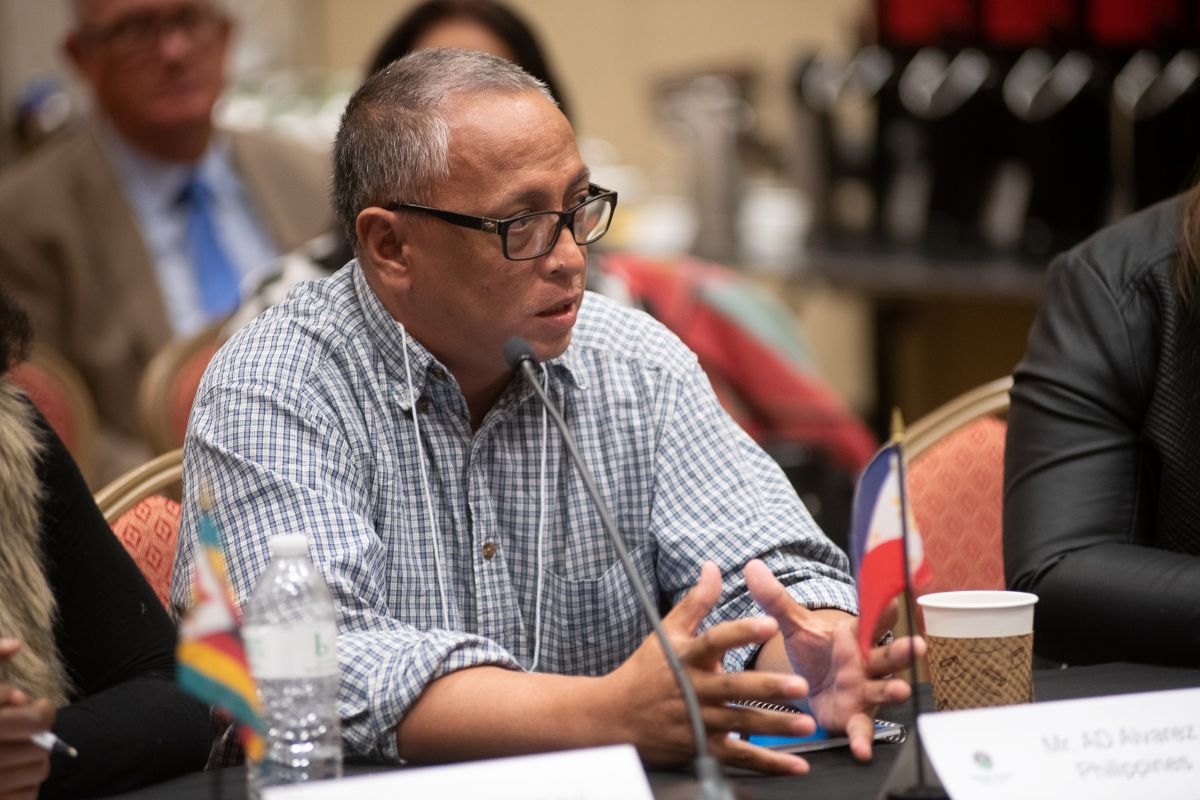
Here in the Philippines, many farmers are making the extremely difficult decision to skip planting a crop this season, which is our main one. As a tropical country, we have several seasons in a year. The soaring cost of inputs like fertilizer, the price of production now surpasses the market value of harvesting food, making harvesting a losing financial proposition.
The only thing worse than not getting paid for your work is having to pay for the privilege to work. That’s what happens when you suffer losses. And that’s the dire position in which many of my fellow Filipino farmers now find themselves.
Rather than surrendering to despair, we must adapt through innovation. We need access to the world’s best technologies. This is how we achieve true resilience.
Farmers everywhere know that times are tough. The source of many of our current challenges can be summed up in two words: “fertilizer shock.” The price of this essential ingredient to agriculture has been going up for years and lately it has spiked.
About 30 percent of the world’s globally traded fertilizer flows through the Strait of Hormuz. Its closure during the war with Iran means that almost nothing can transit the only sea passage from the Persian Gulf to the rest of the world.
We’re all paying a price for the shutdown of this commercial chokepoint—and receiving an uncomfortable reminder about the importance of freedom of navigation.
Too often, we take this principle of global order for granted. People everywhere benefit when ships can travel through waterways such as the Strait of Hormuz and the Red Sea without fear of pirates and predators. This is especially true for an archipelagic nation like the Philippines that is entirely dependent on maritime trade routes.
Today in the Philippines, the price of a 50 kg bag of prilled urea—a basic form of fertilizer—is more than 60 percent higher than it was a year ago. It’s even costlier in remote areas, where poor communities are more likely to rely on old-fashioned approaches to agriculture.
The people of the Philippines can’t resolve a war that’s thousands of miles away. But we can improve our agriculture resilience—and resilience without technology is a slow defeat.
We must begin by rejecting the narrative of agriculture in the Philippines romanticized as a backbreaking, traditional lifestyle involving water buffaloes and manual labor.
This mindset keeps our rural communities poor. They remain vulnerable not only to “fertilizer shock” but also to climate change and pest pressures, threatening local food security.
Farming is not a charity project. It’s a business and a science. Filipinos don’t need sympathy. We need a reform of our ag system starting with insurance, access to capital, mechanization, fair credit, and value chains that have the farmers in the center and not as the sacrificial lamb. Even more, we need access to modern biotechnology and push back on the food ideologies. When given access to the tools of modern science, we can flourish and compete.
I’ve seen this on the Camotes Islands, a highly rural area that has agriculture vulnerable to shocks. The rising cost of fertilizer has hurt my farm operation, but we can withstand it because we’ve embraced modern technologies with higher yields such as Bt corn.
By leaning into technology, we can endure inflationary pressure. Our Bt corn allows us to mitigate the devastating yield losses of the fall armyworm. Farmers who don’t use Bt corn, acting as a built-in crop protection tool, however, can expect to lose 30 to 50 percent of their yield to these moth larvae. Because of this, they can’t absorb the higher cost of fertilizer and other inputs.
We’re looking forward to the re-opening of the Strait of Hormuz and the end of war. That would be the best immediate news for us, and for so many around the world. It would bring down prices right away and make it possible for farmers to prepare for the planting season.
Yet we also must take a long-term approach and make sure our nation’s agriculture can endure the volatility of geopolitics and economics. A lot of forces are outside of our influence, so we must make the most of what we can control—and that means embracing the tools and technologies that allow us to thrive.