Many of us celebrate the Green Revolution for feeding billions of people and improving the human condition.
Yet this agricultural miracle continues to suffer from critics who demean it as an environmental fiasco that harms our planet.
These detractors are not merely mistaken. They are outrageously wrong. Without the Green Revolution, our world would be poorer and hungrier. With a need to feed a growing population, it is likely that large areas of forests might have been converted into farmland, severely affecting biodiversity, with many plants and animal species becoming endangered.
Thanks to the visionaries of the Green Revolution, those concerns have not materialized.
I have a vivid memory of the world before the Green Revolution, when farming was primitive and low-yield crops failed to meet my nation’s needs.
Growing up in a village in southern India in the 1960s, I witnessed an appalling crisis of deprivation. Children who weren’t fed at home stood in long lines at school to receive scoops of cooked wheat (kichdi or upma). Then Prime Minister Shri Lal Bahadur Shastri pleaded with people to skip one meal every week so that the saved food could help the poor. Hunger was a constant presence and menace.
Then came the innovations of the Green Revolution, as scientists worked with producers to develop better crops and techniques. Farms flourished. Food became abundant. India still has plenty of problems, but the struggle to feed ourselves is nothing like it used to be, even though there are now more than a billion of us.
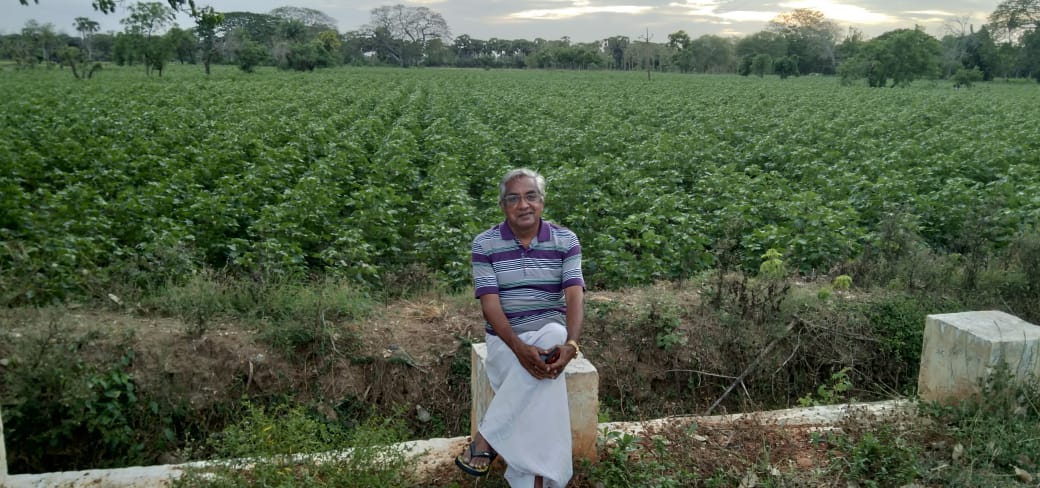
The Green Revolution allowed farmers like me to make more of the land. While we’re farming roughly the same amount of land as we did when I was a boy, our yields have boomed. They vary depending on crop type and region, but we’re producing far more food than we did before the Green Revolution. Today we are comfortably placed to produce enough food for a population nearly three times larger than what we had at Independence, and we even have exportable surplus.
This means the Green Revolution also has spared the land. To feed today’s larger population with the seeds and methods of the 1960s, we would need to devote an additional 150 million hectares to agriculture. That’s two times the size of Texas and three times the size of France.
Nobody’s making more land, so the additional farmland would have to come from somewhere. Many reserve forests across the country might no longer exist without the Green Revolution. In the absence of productivity gains, large tracts of forest land would likely have been converted into agricultural land to meet food demand. The arithmetic is simple and brutal: Low-yield crops cannot feed a growing population unless we pay a price in forests.
The Green Revolution allowed us to escape a crisis of mass deforestation and habitat destruction.
In an alternative future without the Green Revolution, animals and plants would have lost their natural habitats due to encroachment and expansion of human settlements and farming activities, ultimately decline and possibly go extinct, devastating biodiversity. Soil would erode because it would lack the protection of trees, which also regulate rainfall and mitigate its effects. The losses would change weather cycles, worsen flooding, and promote droughts.
Those are just the ecological costs for India. The carbon costs also would hurt us, and the effects would stretch beyond our borders. Tropical forests store hundreds of tons of carbon dioxide per hectare. Cutting down 150 million hectares for low-yield agriculture would release between 45 and 60 billion tons of carbon dioxide into the atmosphere. Deforestation would cause a climate-change catastrophe.
It’s true that agriculture emits greenhouse gases, and I’m concerned about the effects of climate change on my farm. Monsoons are more erratic. Daytime temperatures in the summer have soared. Minor pests have emerged into major threats.
India already faces limitations in water resources. Producing more food through horizontal expansion of farmland rather than productivity enhancement would have made water scarcity even more severe. Like farmers everywhere, I’ve adapted. New varieties of crops, such as rice that better withstands flooding, have helped me cope. I’ve also introduced micro-drip irrigation to conserve water and fight drought.
Farmers like me would do even better if India’s government were to become more open to sound science and safe technology. I’m still prevented from planting a type of pest-resistant soybean that farmers in many advanced nations take for granted. This means that for all the amazing advances we’ve enjoyed in agriculture, there remains room for improvement.
Success will require us to recapture the spirit of the Green Revolution. We might begin by appreciating that its benefits are not limited to big increases in food production. The Green Revolution is in fact one of history’s greatest unrecognized achievements in conservation and climate.
Those who ignore this truth are not protecting the environment. They’re failing to understand it—and they threaten us all.