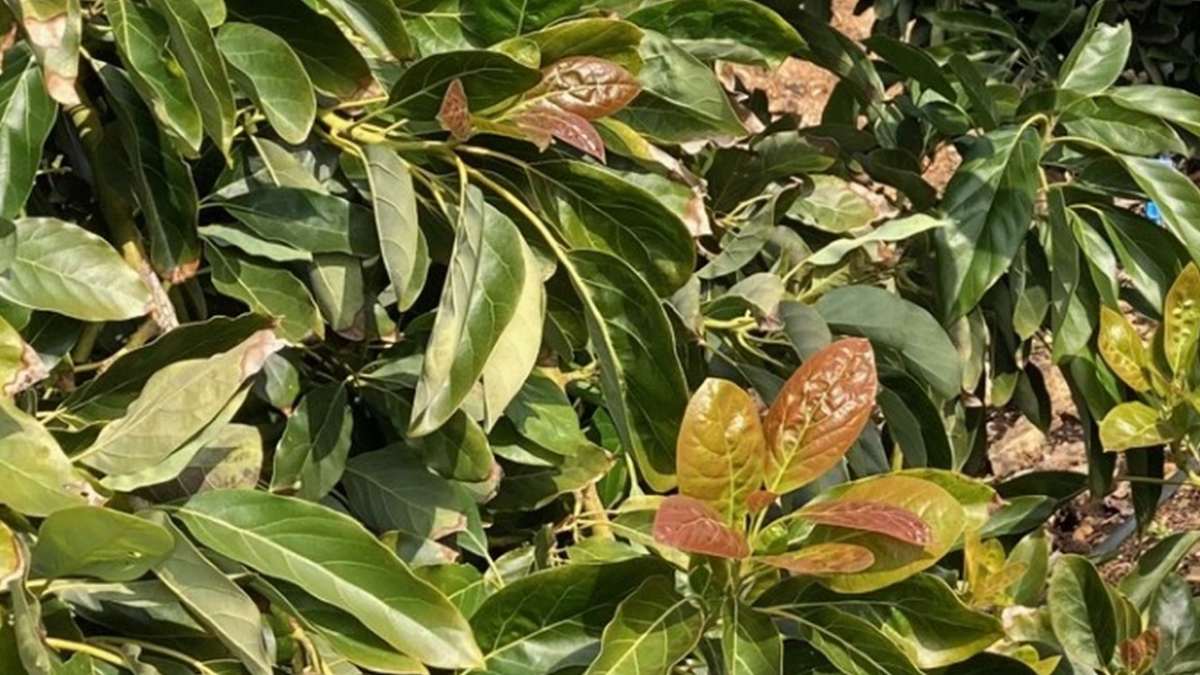
Avocados come from Mexico, not the Mediterranean.
At least that’s the old way of agricultural thinking. The new way can imagine incredible possibilities, including farmers who grow avocados in Sicily—in a success story of resilience and adaptation.
As an Italian farmer, I think about the future of farming all the time. It starts with my own farm here in Tuscany, where I grow wine grapes and olives.
Avocados in Sicily may be a hard concept to comprehend, at least initially. The more you think about it, however, the more it makes sense.
Sicily is famous for citrus. A triangular island about the size of the U.S. state of Vermont, it’s home to nearly 5 million people—and its warm weather, sunny days, and volcanic soil make it ideal for lemons, oranges, and limes. Other crops also flourish here, including wheat and olives, but citrus groves are central to Sicily’s landscape and identity.
Yet the citrus is suffering.
Sicily’s temperatures are setting records, including an all-time high for Europe in 2021, when the heat soared to nearly 120-degree Fahrenheit and nearly 50-degree Celsius. That outlier day in August made headlines, but the bigger story is that Sicily is simply hotter than ever before.
The island also is drying up. Droughts are more common. Water is less available. Another challenge is a specific fungal disease that attacks citrus. It has become worse in recent years.
“As temperatures rise every year, my yield of lemons and oranges is dropping 5 to 10 percent annually, and it’s getting harder and harder to grow them,” Sicilian farmer Federico Bucalo told The Times of London.
Farmers are learning that in an era of climate change, they can’t cling to their former ways. More Italians are taking up precision irrigation that conserves water plus regenerative systems that preserve soil health in stressful conditions. We also must remain open to new breeding technologies based on sound science that can create more sustainable crops—and we need the support of public officials to make this possible.
We also need to embrace new approaches—and that can include experiments with tropical crops that aren’t traditionally associated with Sicily.
One of them is the avocado. If that sounds alien to Italian cuisine because it’s native to the Americas, remember that so is the tomato—and it’s a conventional ingredient of basic meals such as pizza or spaghetti.
Avocados now grow on hundreds of hectares in Italy. Other farmers are already growing bananas and mangos. Some are testing papaya, passion fruit, and lychee as well as sugar cane and coffee beans.
It’s hard to know what will take. The only way to find out is to try. My guess is that many Italian consumers will want these products. Sicilian production will shorten their journey from farm to fork and freshen their flavor in places like Rome, Milan, and Venice.
It helps that consumers regard many tropical fruits as superfoods, rich in vitamins and nutrients as well as delicious. The global market for so-called “exotic” fruits expands by nearly 7 percent per year, according to one estimate. By 2033, it will could worth around $34 billion.
This bodes well for agricultural innovation in Sicily. Farming is a business. If consumers want to eat more tropical fruit, farmers will grow it, if we can.
My own farm is on the Italian mainland. It’s a winery near Siena. Our area is not well suited for tropical fruits—at least not presently.
Yet climate change is a factor. Temperatures can get hot here, too. I’m still cautious about making major changes. A hot year in 2022 resulted in wines with a higher alcohol content that we wanted. In 2024, the opposite was true. We’ll see if a trend emerges.
In the meantime, we’ve retrained some of our vines to grow in different ways so that they are better able to resist the humidity that can cause rot and disease.
For now, I’ll eat avocados rather than grow them, but I welcome the surprising idea that Sicilian avocados could become one of Italy’s national foods.