Food often moves from farms to forks. Sometimes it moves from farms to forks in flight.
Global airline passenger traffic last year hit nearly 10 billion. That’s more than one journey per person on the planet.
These hungry travelers need food. Someone has to feed them.
For Emirates Airline, the solution is the world’s largest indoor vertical farm.
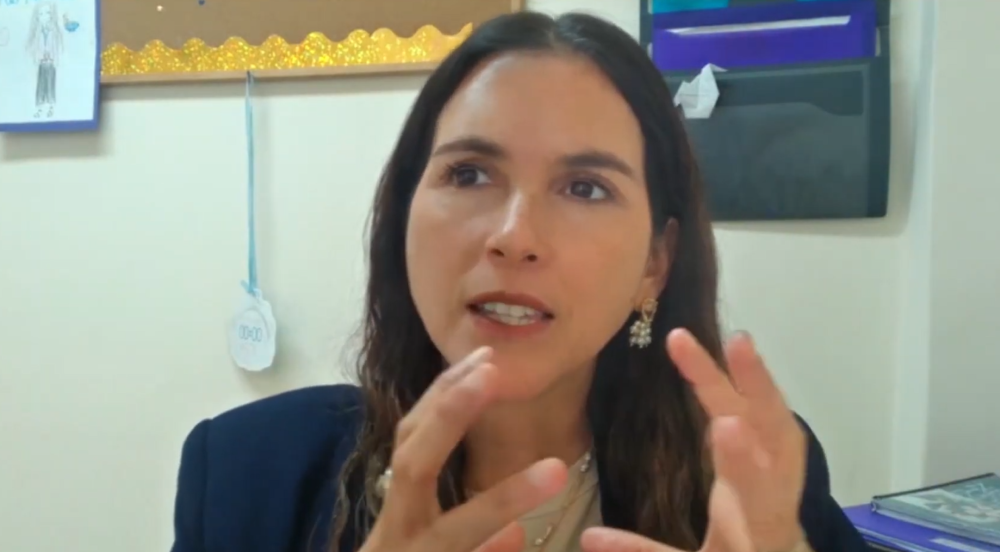
I was present at its creation in the United Arab Emirates. I was the project’s second employee, after the architect, who designed a building of 330,000 square feet for a big operation known as Bustanica, which is the Arabic word for garden or orchard. My job as production manager was to find the best way to generate high-quality food in a cost-effective way, at fast pace, and with sustainable goals in a harsh environment.
Bustanica now turns out tens of thousands of ready-to-eat salads per day, according to a recent segment on CNN.
These meals mostly feed airline passengers, and those who sit in window seats might look down and see the conventional farms on the ground. They spread across open fields. They’re essentially two dimensional—and horizontal.
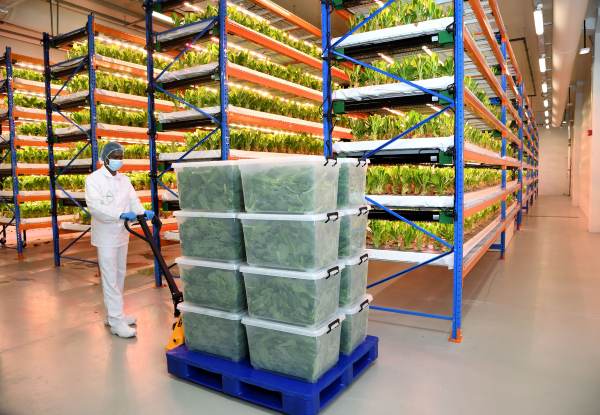
Vertical farms are indoors. They rise upward, with crops that grow in stacked layers. They’re three dimensional.
From the outside, vertical farms look like ordinary buildings. Inside, they are factories of food production. Bustanica’s vertical farm is a miracle of technology that grows leafy greens such as lettuce, spinach, kale, arugula, and a wide range of microgreens as well as edible flowers and strawberries.
This couldn’t happen under the UAE’s normal desert conditions. The climate is too dry and hot. Fresh water is scarce. The growing season is short. As much as 90 percent of the food consumed by Emiratis is imported from elsewhere.
Bustanica makes farming possible through climate control and crop management. Workers keep temperatures in check. They ensure the plants have enough humidity to breathe. They use artificial lights to mimic the sun. These tasks require a lot of energy, but the UAE as a nation is rich with energy and the prices are reasonable.
Soil is at the heart of a traditional farm. In Bustanica’s vertical farm, it’s water. The crops grow in a hydroponic system that replaces the soil and feeds key nutrients with recycled water. This leads to an amazing feat of conservation, with plants that require 95 percent less water than crops that grow in dirt. Bustanica collects and analyzes data constantly, and it has discovered that its vertical farm needs only 15 liters of water to grow a kilogram of produce. On a typical farm, the same kilogram of produce takes more than 300 liters.
Even more impressive may be the fact that the indoor crops require no special protection from the weeds, insects, and disease that menace crops produced outdoors. This means Bustanica needs no herbicides, pesticides, and fungicides. This saves money and delivers a product that is so clean it requires no washing in the facility or by consumers.
“Imagine fresh, crunchy, delicious, nutritious, chemical-free greens all year-round,” says CEO Shahreyar Nawabi. “In fact, we recommend you eat the greens straight from the box, even washing it will contaminate it.”
One of the great advantages of Bustanica is its predictability. Its controlled conditions provide excellent food on a steady schedule. The company can negotiate yearlong contracts and develop strong relationships with buyers. In a low-margin industry that is constantly afflicted by uncertainty involving everything from variations in the weather to turmoil in world markets, Bustanica is resilient and reliable.
Vertical farming remains new, and it has struggled in the ways that often accompany innovation. Some investors have fallen into the trap of chasing the most advanced and often expensive technologies. They can pursue perfection rather than work to solve problems in practical ways that provide clear returns.
We may see more bankruptcies and failures associated with this sector of agriculture in the near term. In the long term, though, we’ll celebrate more success stories like Bustanica, as vertical farming continues to take off and eventually achieves its cruising altitude.