Russia has declared war on the world’s food supply. Again.
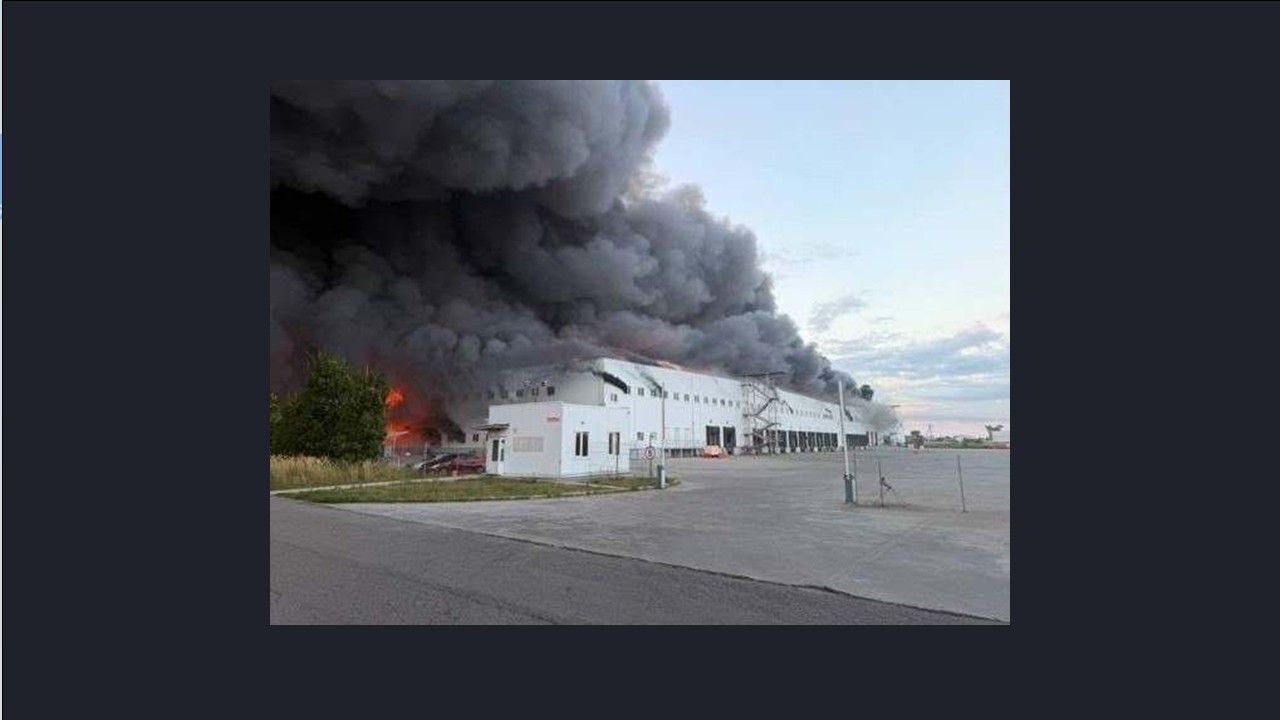
As Ukrainian farmers like me work to harvest our crops, Russia once again has let loose its bombs—and this summer it has targeted civilian ships on the Black Sea, the ports that serve them, and food distribution centers further inland.
This is an attack on more than Ukraine and its people. It’s also an attack on everyone who lives outside our borders.
It’s an attack on you.
Here in Ukraine, our export economy has all but stopped. It’s simply too dangerous to load grain in Ukrainian ports and move it across the Black Sea to customers in Europe, Africa, and beyond.
The deadliest strike came last month, when three Russian cruise missiles slammed into the Golden Leo and its cargo of corn. The attack killed 10 people and sank the ship, which was unarmed.
The immediate goal of the Russians is to harm Ukrainian civilians. They want to wreck our economy and demoralize us. Their war now seeks to hurt farmers as we try to grow our food and sell it to willing buyers at fair prices. They also want to hurt Ukrainian truckers, dock workers, logistical teams, and more.
My country is under attack and at war with Russia. In 2022, Russia launched an unprovoked and brutal invasion. Hundreds of thousands of people have died. Even more have suffered injuries. The property damage is incalculable.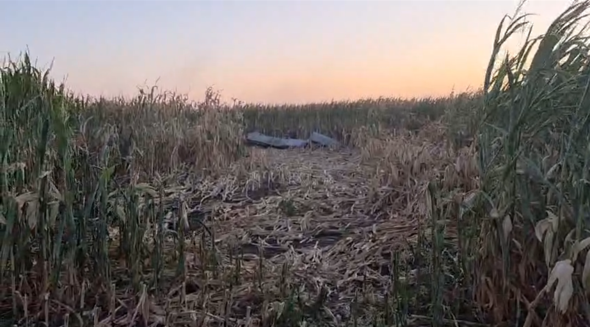 My farm is far from the front lines, but it can feel like a war zone war zone. A few days ago, as we harvested silage for our cows, we discovered an unexploded cruise missile. We immediately called bomb-disposal experts, who defused the 8-meter-long weapon and took it away. We were lucky it didn’t explode—but it reminded us that no one is safe.
Friends around the world have supported our cause with everything from prayers to material aid. We are grateful for all of it. Some observers, however, have shrugged off our troubles. They may feel sorry for Ukraine, but they think that Ukraine’s plight isn’t their concern—and they know that every war delivers collateral damage, however unfortunate.
Yet this war’s collateral damage touches everyone.
Russia is assaulting the international community, as the sinking of the Golden Leo made clear. Its missiles killed the merchant vessel’s Ukrainian port pilot and ruined its cargo of Ukrainian exports, but the damage radiates far beyond my country’s borders.
The nine dead sailors came from a crew of Indians and Syrians. The ship flew the flag of Guinea-Bissou, the West African nation. It was owned by a company in Turkey. It was scheduled to unload its corn in Romania. This food probably would have reached a final destination in Egypt, Italy, Spain, or another country that depends on grain from Ukraine.
As with so much global trade, the Golden Leo and its men were on a mission of peaceful commerce. They transported food, not weapons. They never should have become a military target.
Russia chose to murder innocents and deny food to hungry people, in pursuit of its ruthless imperial ambitions.
The cost of these new attacks is impossible to calculate with precision, and it rises with each new strike. The New York Times reported that Russian forces hit “at least 50 cargo ships” and killed “more than 30 civilians” in June and July. Their aggression has stretched into August. Their violent toll continues to mount.
These bombings will cause the price of food to rise everywhere, often in surprising ways. Four years ago, one of my fellow members of the Global Farmer Network showed how Russia’s war drove up the price of yams in Nigeria. “The world’s food security is on the line,” wrote Rotimi Williams.
Most consumers won’t make the connection between the war Russia is waging and food inflation, but they’ll still pay higher prices as they try to feed themselves and their families. 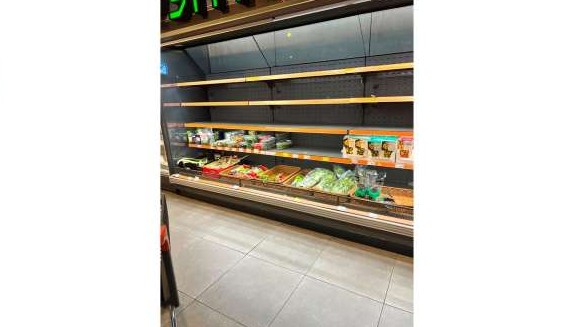 Here in Ukraine, the Russians aren’t only terrorizing our external trade with strikes on ships and ports. They’re also shattering our internal supply chains. In recent weeks, they’ve destroyed distribution centers that send food to Ukrainian supermarkets. Many of these stores are running out of milk, meat, fruits and vegetables, and other basic products. The coming winter may be the hardest we’ve faced in four years of fighting.
On my farm, we’ve enjoyed a good harvest this year. Our partners took all our barley, canola, and wheat. They managed to export some barley but had to put everything else in grain storage. They can’t move our food to the ports. The risk of death and destruction is too great.
Ukraine’s economy depends on trade. We export about 80 percent of what we grow. If the current hazards persist, farmers will start to go bankrupt. Maybe that’s the point.
These challenges will test our resilience. But the threat we face is not ours alone. Russia’s war is also a threat to you.