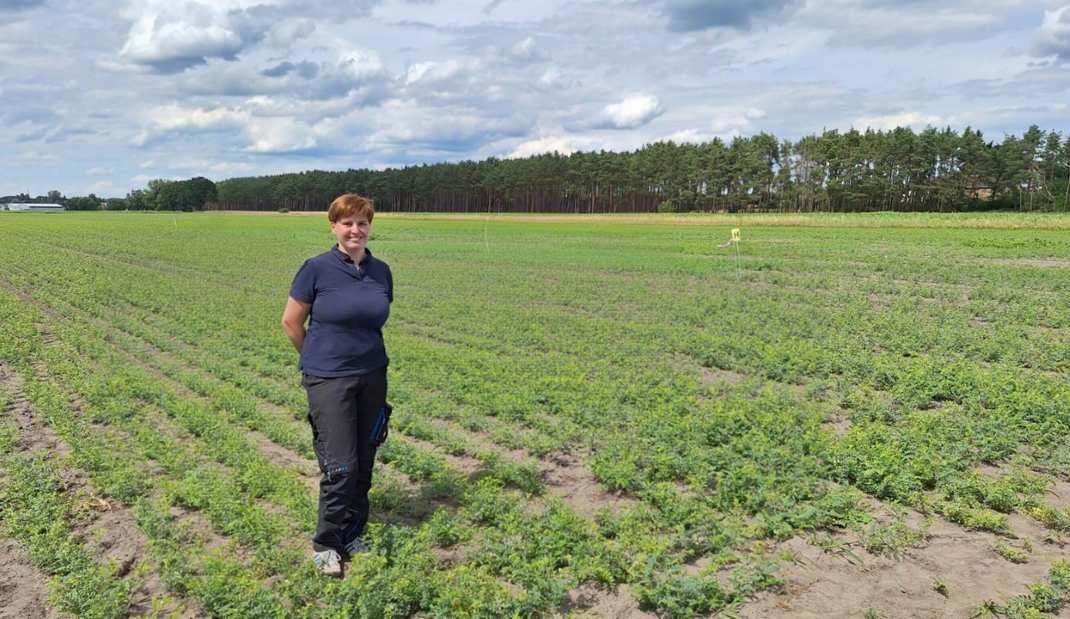
I don’t do it for awards. That’s not why I farm.
I’m a farmer because it’s a vocation. It’s something I’ve always wanted to do. I enjoy producing food for people to eat.
The best award a farmer can receive is a successful harvest. On my farm in Germany, it means leading a team as we raise cattle and grow crops in a sustainable way and to the best of our ability. This is our constant goal.
Yet it’s nice to be noticed. It’s satisfying to know that others recognize hard work. It’s good to be seen.
That’s why I’m so grateful to receive the 2026 GFN Kleckner Global Farm Leader Award. I’ll be in Des Moines, Iowa, to accept it formally on October 21 during the World Food Prize and Borlaug International Dialogue.
I’m grateful to the Global Farmer Network for this incredible gift. I’m grateful to GFN leader Reg Clause, one of GFN’s Five Founding Farmers, for his kind words announcing it in this GFN column last month. And I’m grateful to Dean Kleckner, the award’s namesake. I never met him, but I’ve heard a lot about him. His lifelong commitment to agriculture is an enduring inspiration—especially to a German farmer like me.
One thing I’ve learned about farming is that it can be a lonely line of work. Farmers usually live in rural areas, away from cities and population centers. We often toil alone in fields and pastures. We may have livestock to keep us company, but I also know what it’s like to spend more time with animals than with people.
I’m a leader on my farm—and leadership can be lonely. Ernest Shackleton, the great explorer of Antarctica, made the point: “Loneliness is the penalty of leadership.”
I’ve never taken the daring risks of Shackleton, but I think I know what he meant. Leaders set goals and examples. We build trust but also hold others accountable. We make final decisions and accept responsibility for them.
It can feel like a lonely business.
My personal leadership involves managing 4,000 hectares of both arable land and grassland. We raise about 950 dairy cows as well as youngstock and a small beef herd. We grow a variety of crops, including wheat, barley, rye, chickpeas, and sunflowers. We maintain a strong focus on high-quality forage.
I try to be a leader off my farm as well. I want farmers to have a voice in politics and public policy. We must tell our stories to everyone from government officials to local consumers. They must know who we are and what we do.
I love farming, but it’s not in my blood in the way of so many others. My mom and dad weren’t farmers, so I’m not a farm kid. I didn’t inherit this profession. Instead, I chose it. I love it and I can’t imagine having chosen anything else. Yet it means that I can’t turn to my parents, aunts and uncles, or any relative for the advice and support that I sometimes want—and I can’t count on them for the feedback that I often need.
I’m also a woman in what can seem like a man’s world. I’m a strong believer in gender equality. Women can farm as well as men. We are an amazing resource for agriculture. But I want to say that women farmers face special challenges in this industry as we look for mentors, seek professional partners, and hire employees. The Food and Agriculture Organization of the United Nations acknowledged this in making 2026 the International Year of the Woman Farmer.
Put it all together—the ceaseless test of leadership, the total lack of family ties, and the fact that I’m a woman—and farming can feel like a lonely line of work.
I’m not complaining. This is not a cry for approval or a plea for sympathy. I mention it simply to underscore how much I appreciate receiving the GFN Kleckner Global Farm Leader Award. Part of me just wants to say that words fail me—except that here I am, composing a column about how much this award means.
Learning that I would receive the Kleckner Award is the opposite of loneliness. It has delivered a sense of inclusion and thankfulness. It fills me up as a farmer—and it fuels me to push forward.