Besides the ongoing drought in the Mid-Atlantic region, the most challenging health problem on my farm this year involves grapes. A freeze in April significantly damaged the plants. At the end of this growing season, we won’t have much of a harvest.
Yet recent media coverage may have persuaded you that the biggest health threat facing farmers like me comes from using crop-protection products. These are the tools we use to fight weeds, pests, and disease.
Lawyers have filed thousands of cases in state courts on behalf of people who claim they got cancer from one of the world’s most useful method of weed control, best known by its brand name: Roundup. Its main ingredient is glyphosate.
The Environmental Protection Agency and numerous other international scientific bodies, including in the EU, have determined otherwise—and now the Supreme Court has affirmed that federal laws and rules supersede state regulations. In a 7-2 decision, the justices said that the manufacturers of glyphosate can’t be held liable under state laws for failing to warn consumers about a health risk when the EPA does not require a warning label in the first place
The “EPA has repeatedly re-evaluated glyphosate and has repeatedly concluded that glyphosate is not likely to cause cancer,” wrote Justice Brett Kavanaugh for the majority. “As a matter of federal law, [the makers of glyphosate] legally must use a label without a cancer warning unless and until EPA approves or requires a change.”
This means the makers of glyphosate can’t be sued for failing to attach a label that federal law forbids them to use.
That sounds like common sense.
I’m not a lawyer, so I’ll leave any additional legal analysis to the experts.
As a farmer, though, I’m an expert in the safe use of glyphosate. We have applied it to our fields here in Maryland, where we grow not only wine grapes but also corn, soybeans, and green beans. It’s been approved for use in agriculture since 1974, predating the existence of biotech seeds by decades. As Justice Kavanaugh said it has been repeatedly evaluated and repeatedly deemed safe when used as labeled.
I don’t simply believe that glyphosate is safe. I know it’s safe, provided that the people who use it follow the instructions on the EPA’s approved label.
Following the instructions is essential, in farming and in everything. When you take a test in school, you’re supposed to follow the instructions at the top of the page, or you may fail due to not following the directions correctly. When you drive your car or truck, you follow the instructions of red lights and stop signs in order to drive safely. When you swallow a pill from your medicine cabinet, whether it’s ibuprofen for a backache or a prescription drug for something more complicated, you must follow the instructions for dosages and more as listed on the label in order for the mediation to work correctly or as prescribed.
Crop-protection products are the same. Following the instructions on the EPA’s approved glyphosate label means following the health and safety guidance to protect me as the applicator as well as the environment and community around me.
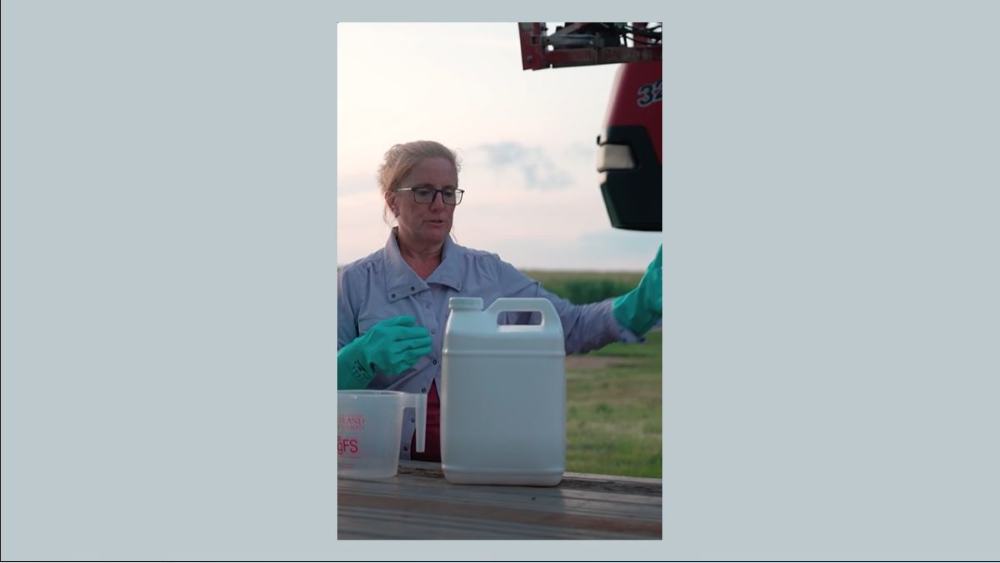
The instructions are easy to understand and obey. When I spray glyphosate, I wear personal protective equipment (PPE). In other words, I don’t put on shorts and flip flops. Instead, I wear a long-sleeved shirt, pants, socks, shoes, and chemical-resistant gloves. Watch me do it in this short video short video.
A little glyphosate goes a long way. I pour the volume of concentrated product into a container of water, some type of hand or ground sprayer, as specified by the label for the crop. This can typically range from 16-32 oz per acre. North Dakota farmer Billie Lentz, who is my fellow member of the Global Farmer Network, recently joked that she can treat an entire acre with “not a latte” of glyphosate, meaning an amount that would fill a coffee cup.
The EPA is hardly alone with its views on the safety of glyphosate. A strong consensus among scientific and government agencies around the world says that glyphosate poses no risk to human health when used as directed. These groups include the European Food and Safety Authority as well as similar bodies in Australia, Canada, Japan, and elsewhere.
They have evidence on their side. The Agricultural Health Study—a massive study involving thousands of American farmers for more than three decades—reveals that cancer rates among farmers are essentially no different from what they are in the general population.
Even so, glyphosate remains under threat. Mixing ignorant politics with scientific illiteracy can lead to results that are best described as “toxic.”
That’s a metaphor, of course—but the ironic reality is that emotion-based rather than science-based restrictions on glyphosate would force many farmers to turn to herbicides that perform similar jobs with harsher, more toxic chemistry.
In the meantime, I’m grateful for a Supreme Court ruling that will help me and other farmers keep access to a safe and important tool of food production.