They say that cheats never prosper.
Yet the cheats are thriving here in Nigeria, as they rip off farmers like me and prevent us from getting the supplies we need to grow our food.
Their illicit business is booming everywhere. The counterfeiting of agricultural inputs has become a crisis.
Imagine buying a bottle of Coca Cola only to sip it and discover that it’s watered down. First, you notice the taste that is not right. Then you realize you’ve gotten less than what you paid for. Finally, you feel like a dupe.
Something similar is happening too often to farmers across the continent when we purchase fertilizer, crop-protection products, seeds and so much more. We think we’re buying one thing, only to discover that we’ve wound up with another—an inferior item that harms our crops, depresses our yields, and hurts our bottom line.
When people think of counterfeiting, they rarely think of agriculture. Their minds usually turn to counterfeit money and the problem of passing on phony currency to unsuspecting recipients. Or even the most recent news headline around the counterfeit merchandise of the World Cup.
Yet there have always been other kinds of counterfeiting, from art forgeries to fake signatures on legal and financial documents. Even Pliny the Elder—a Roman writer who died during the eruption of Mt. Vesuvius almost 2,000 years ago—complained about the menace of watered-down wine.
Farmers increasingly fall to these deceptions. In the last decade, Europol has seized thousands of tons of sham pesticides through Operation Silver Axe, an ongoing police action that collaborates with industry groups. By one estimate, counterfeit pesticides make up as much as 14 percent of the European market, and they’re worth more than $1 billion annually.
If that sounds bad, I’ve got unfortunate news: The problem is far worse in the developing world, where the rule of law is weak and authorities lack the resources to mount anything like Operation Silver Axe.
I’ve seen it up close, especially with fertilizer.
Like farmers all over, we use fertilizer to deliver nutrients to our crops. The key ingredients are nitrogen, phosphorus, and potassium. Blenders mix them in specific ratios, indicated on labels. For example, the label on a 50-kilogram bag of fertilizer might say the bag contains 10 percent potassium. In fact, however, it may contain only 5 percent.
That’s a counterfeit.
I once spread counterfeit fertilizer on my corn fields. I had bought it unknowingly, of course. We applied it to about 10 hectares. After a week and a half, the corn looked like we had not used any fertilizer at all. The plants showed obvious deficiencies, with yellowed leaves and purple tips. We knew they weren’t receiving the nutrients that fertilizer provides.
When this happens, farmers have little recourse. If we complain to the dealer who sold a counterfeit, we often hear that we received a genuine product but failed to apply it properly.
That’s a big gray area: A counterfeit bag of fertilizer usually will contain some nutrients. In other words, it will work a little bit. Occasionally farmers know without question that they’ve been swindled. Other times, we aren’t 100-percent certain. We may only suspect it.
No matter the result, it’s impossible for us to prove our case. We’re out of luck.
This costs both money and time. The purchase of counterfeit fertilizer is of course a waste of cash. The lost days also carry a price because they disrupt the growing season. It’s difficult to recover. The result is that we grow less food than we should—not because we’re bad farmers, but because bad actors have deceived us.
Unfortunately, the problem of counterfeit products is not limited to fertilizer. Fake crop protection products can be very ineffective, and their unintended use may lead to harvest loss and potentially expose the farmer to unacceptable health risks. Use of counterfeit seeds can decrease productivity and possibly lead to higher costs if farmers purchase more inputs in an attempt to increase yield.
My farm is now large enough that I can buy directly from authorized companies. Smallholders, however, don’t always have this ability. They’re vulnerable because they must rely on dealers who specialize in lesser quantities. Most dealers are honest, but enough are dishonest to create trouble. And even honest dealers can sell counterfeits without knowing it because they can be the victims of dishonest blenders up the supply chain.
The first step in addressing this problem is to raise awareness across the whole value chain that counterfeit products are a problem and how to recognize them. The design and implementation of an authentication tool farmers can access to identify fake from real products would be helpful.
There is only one solution, however, and that’s the rule of law. Governments need national protocols, business licensing, and criminal prosecutions.
Until we have these things, cheats will prosper and farmers will suffer.
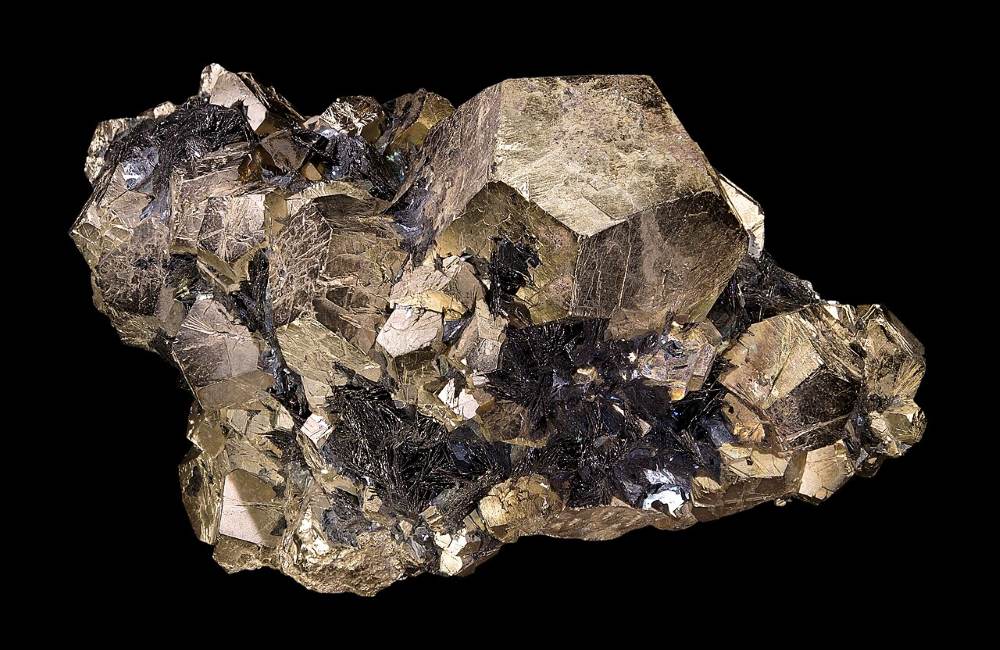
Featured image: Pyrite Locality : Rio Marina, Elba Island, Livorno Province, Tuscany, Italy Size : 12 x 9.5 x 5.6 cm; Didier Descouens, CC BY-SA 4.0 via Wikimedia Commons