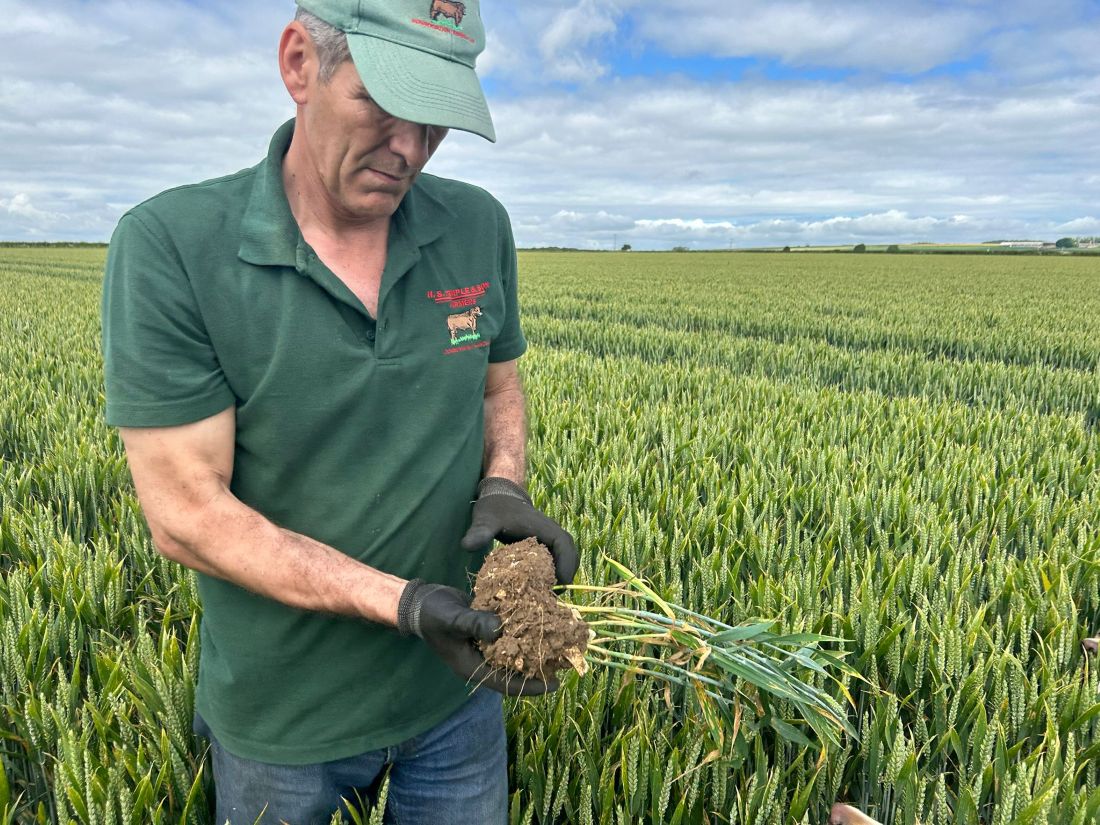
Artificial intelligence can’t replace real farmers.
Don’t get me wrong: AI is an amazing tool. It’s already making agriculture better and it holds the promise of much more. I welcome its arrival and flourishing, particularly in managing data.
The purpose of a tool is to enhance human abilities. A hoe is better than a hand for digging into the soil. That’s why we use it—and that’s why farmers around the world use AI. My mental arithmetic is good but the first calculator I ever used proved faster.
We’re adopting it to grow food and conserve resources. We have entered a remarkable era of precision irrigation and spraying, disease detection in crops and animals, and self-driving tractors—all of it powered by the massive computing power of AI.
One of my great hopes for AI is that it will improve the public policy of agriculture. Regulators should use it to speed up approval processes that right now impose long and costly delays that hurt producers and consumers.
Yet AI has major limits. It simply cannot duplicate human observation, experience, and wisdom.
I’m thinking of a bit of an autobiography. It involves another technology more than two decades ago. Back then, GM crops were a novelty. I’d known about them from field trials on farms in the United Kingdom, and I appreciated their potential.
Since then, they have thrived as safe and healthy crops that let farmers grow more food on less land in sustainable ways. Some governments in Europe and elsewhere have resisted GM crops, but today in much of the world, they are an utterly conventional part of modern agriculture.
In the early 2000s, however, lots of farmers had questions about these new crops. Many of us wondered about scale. It’s one thing to run a small experiment on a carefully cultivated field and another to operate a commercial farm in uncertain conditions.
So I took a trip to Spain.
The travel involved a flight across water, followed by a long train journey into the hinterlands. This was an investment not only of money but also of time: Reaching our destination required a journey of a day and a half.
And it took all of five minutes for me to learn a vital lesson.
I saw large fields of crops, with conventional hybrid corn alongside a pest-resistant GM crop. The two crops had sprouted from the same soil. They had received the same amount of sunlight and rain. They had suffered the same pressure from insects and disease.
Yet the contrast was striking. In the field the GM corn was taller, the roots were deeper, and the plants were cleaner and healthier, the cobs showed no risk to mycotoxins. It wasn’t even close.
This was no surprise. Because I knew the science of GM technology, I was intellectually ready.
Gazing on those fields with my own eyes, however, was a revelation. It was the difference between grasping a theory and observing a reality. In a flash, I gained a profound understanding of a new way to grow food. Not only that but the wider side issues, which in this case was more effective use of limited water.
This was an utterly human moment—something that AI cannot feel or appreciate. It takes a person to be a witness. It takes a person to acquire an authentic experience. It takes a person to tell a tale from life. Over the years, I’ve shared this one many times and with many people.
AI can allure anyone who hears its call, like a siren in “The Odyssey.” It can work fast. It can make bold statements. It can sound like an authority.
Despite this, AI and its predictive models cannot compete with the persuasive power of a true human story. It can’t provide unfiltered views and opinions from actual farmers who work the land. Men and women see, learn, and know. This is how our species creates and builds wisdom.
This is also why we must continue to hear and amplify the voice of farmers as they make unique contributions to discussions and debates surrounding food and its production.
AI remains a tool—perhaps the most important tool of our time. Yet it’s still a tool whose best purpose is to serve human interests. That’s our opportunity. Our challenge is to take advantage of it rather than to let it take advantage of us. One thing I do remain convinced of though is that human communication remains as important as ever and possibly more trusted.