Report by - Ruramiso Mashumba, Global Farmer Network Regional Lead: Africa Ag
Symposium Overview
The Plant Protection Symposium held in Lesotho brought together a diverse group of stakeholders united by a common goal: to explore how Plant Variety Protection (PVP) can serve as a catalyst for agricultural development across the ARIPO region and beyond. Convened under the theme "Advancing the Protection of New Plant Varieties for Food Security and Sustainable Agriculture," the event fostered candid dialogue among policymakers, legal and intellectual property experts, plant breeders, seed companies, and farmers.
At the heart of the discussions was the Arusha Protocol for the Protection of New Varieties of Plants, which was adopted in 2015. Despite being a decade in existence, the Protocol has seen limited uptake, with only a handful of ARIPO member states having ratified or implemented it. The symposium served as a timely platform to examine the barriers to adoption, identify pathways for implementation, and align the Protocol with the national laws of member states and the broader UPOV Convention framework.
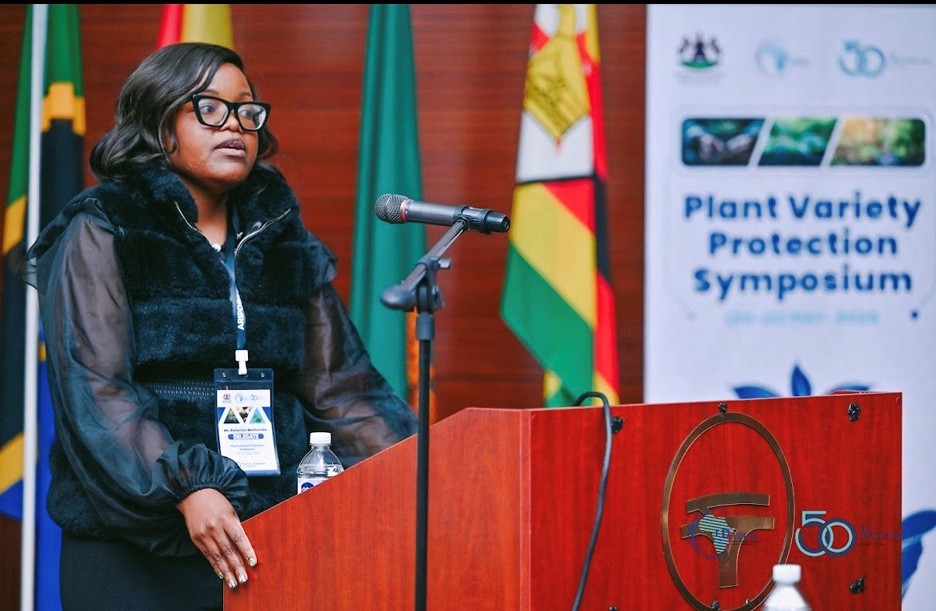
The Farmer’s Voice: Ruramiso Mashumba at the Podium
I was invited to share my perspective as a practicing farmer and offered a grounded, real-world counterpoint to the technical and policy discourse that often dominates such forums.
I spoke with urgency about the critical need for crop varieties that are both climate-resilient and disease-tolerant. Highlighting the devastating impact of the fall armyworm on cereal crops and blight on Zimbabwe’s potato sector, diseases that have caused significant production losses and placed smallholder farmers in a precarious position. These are the challenges of inadequate plant variety protection: farmers are left vulnerable, with few viable options and dwindling harvests.
Zimbabwe’s Seed Sector: A System Under Strain
The challenge is two-pronged confronting Zimbabwean farmers in accessing quality seed: locally available varieties often underperform in yield and disease resistance, while imported alternatives though superior in performance carry prohibitive costs and, alarmingly, have sometimes arrived in country contaminated. This raises serious questions not only about supply chain integrity but also about the adequacy of existing regulatory frameworks to protect farmers from substandard inputs.
Representatives from Zimbabwe’s plant breeding community offered a degree of reassurance, noting that new varieties have been developed and are ready for the market. However, they acknowledged a persistent challenge: without targeted marketing and farmer education, even the most promising varieties risk remaining confined to research stations. The gap between scientific development and agricultural adoption often referred to as the research-to-farmer gap remains one of the most stubborn obstacles in Zimbabwe’s agricultural system.
Bridging the Policy-Farmer Divide
Perhaps the most resonant theme to emerge from the symposium was the disconnect between policymakers and the farmers whose livelihoods depend on the decisions made in legislative chambers and government offices. Participants noted with concern that the voices of farmers are too rarely heard in the spaces where agricultural and seed policies are crafted. This silence is not merely an oversight it has tangible consequences for the relevance and effectiveness of the policies that result.
The symposium underscored an urgent call to action: meaningful farmer representation must be embedded in the policy development process. Forums such as these where breeders, IP experts, farmers, and legislators sit at the same table are not a luxury but a necessity if the ARIPO region is to build a seed system that is equitable, resilient, and fit for the challenges of the 21st century.
The symposium concluded with a shared commitment to advancing the ratification and implementation of the Arusha Protocol, fostering stronger collaboration between research institutions and farming communities, and ensuring that the future of plant variety protection in Africa is shaped by those who work the land.