By Ruramiso Masumba: Marondera, Zimbabwe
President Trump’s renewal of the African Growth and Opportunity Act (AGOA) is good news for African farmers because it provides a brief period of economic relief.
More importantly, it offers a moment of opportunity.
The relief is that many African nations will benefit from the short-term extension of this trade deal, which expired last year. The new arrangement runs through the end of 2026. Without additional legislation in the United States, however, AGOA will go away again.
The opportunity for African farmers is that the uncertainty surrounding AGOA has put our nations on notice. We must seize this moment to improve our continent’s trade resilience.
As a farmer in Zimbabwe, I don’t benefit from AGOA, at least not directly. Zimbabwe is not a party to the agreement. What’s more, trade between the United States and Zimbabwe is small, valued at less than half a billion US dollars year.
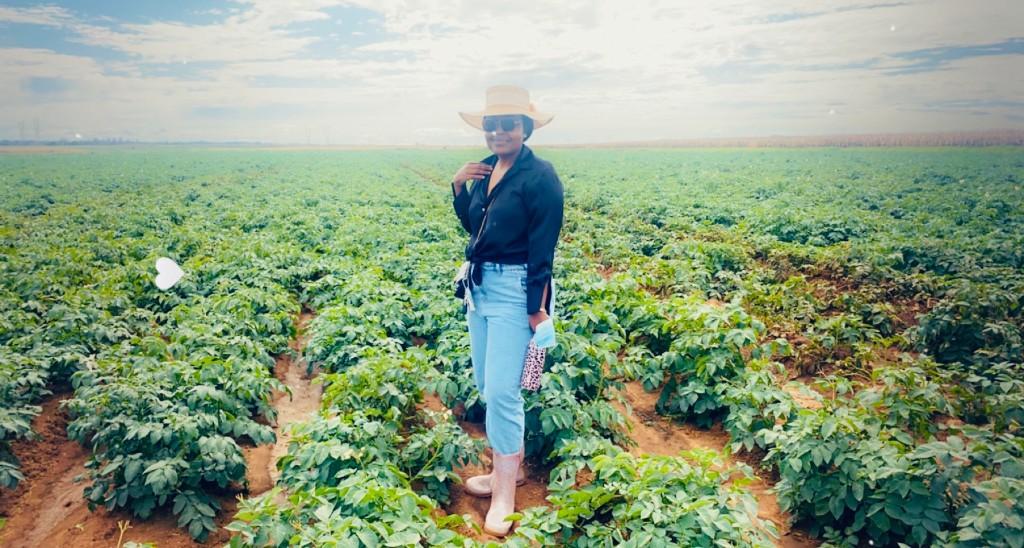
Even if trade between our two countries was robust, I might not participate. On my farm, I’m growing no-till maize and potatoes. Currently, I am not exporting because the local demand for the food I produce is high.
Some of my fellow farmers do depend on foreign markets. Zimbabwe is a major supplier of blueberries, for example. When our crops leave the continent, though, they tend to go to Europe and Asia, not to the United States or anywhere in North or South America.
I’m still pleased that AGOA will continue. As an advocate for African agriculture broadly, I know that AGOA’s extension will empowers farmers elsewhere. Kenyans who grow flowers will maintain their market. American consumers of course will benefit, too: They’ll enjoy the flowers that only Kenyans can grow and they won’t pay big border taxes in the form of tariffs.
Other major agricultural exports from Africa to the United States are coffee, cocoa, and tree nuts—and AGOA helps the farmers who grow and sell these products and the consumers who buy them.
Economists say that South Africa gains the most from AGOA because it trades so much with the United States. The total annual value of this two-way trade tops $20 billion. Products that qualify under AGOA make up many of these transactions.
Zimbabwe is a neighbor to South Africa, and we have a saying here: When South Africa sneezes, the region catches a cold. The opposite also is true: When the South African economy is healthy, the region flourishes. This means that if AGOA builds wealth in South Africa, I’ll see secondhand rewards on my farm.
So AGOA is good for my country, my region, and my continent. I hope Africans take advantage of it in 2026—and that the U.S. government renews it into the future.
But we can’t count on it. AGOA became a reality in 2000. It received a ten-year extension in 2015. Then it went away in 2025. Now it’s back, but only for the next nine months. Nothing beyond that is guaranteed. AGOA may vanish, perhaps even permanently.
Its fate is entirely up to American politicians. It’s out of our hands. As Africans, we can make our case for it and perhaps even apply a bit of diplomatic pressure. We should speak up. But the decisions about AGOA ultimately will be made by non-Africans in faraway Washington, D.C.
Here in Africa, we must work on what we can control—and one thing we can do on our own to improve our trade resilience is to fully utilize the African Continental Free Trade Area.
Under negotiation for years, this pact promises to wipe out most tariffs between African nations. This would help all Africans, allowing us to grow together as we trade goods and services for mutual benefit and without the need to receive anyone else’s permission.
As a farmer, I’m all for it because it would create a larger market for farm products. And nobody in the United States or anywhere else could take it away from us.
First, however, we must build it. No matter what happens to AGOA, we’ll be glad we did.